

Owning a home is a cornerstone of long-term stability, but it also comes with a relentless reality: structures age, systems wear down, and the elements constantly test the integrity of your property. At some point, every homeowner stands in a room, looks at a mysterious blemish, and asks a stressful question: How severe is this damage?
Structural and Ground Integrity: Evaluating the Bones of Your House

The foundation of your home does more than just hold the building off the dirt; it stabilizes the entire framework, distributes weight evenly, and prevents moisture from corrupting your living space. When the ground beneath your home shifts, the symptoms ripple upward through the walls, floors, and ceilings. Understanding the root causes of structural movement requires looking closely at how soil behaves when subjected to heavy rains, severe droughts, and natural shifting over time.
Spotting early warning signs of shifting soil and cracked concrete
Soil expands when wet and shrinks when dry, creating a cyclic push-and-pull effect on your concrete slab or basement walls. Over several years, this movement can cause severe stress on the rigid materials of your home. To determine if your home is experiencing standard cosmetic settling or dangerous structural movement, you need to conduct a thorough visual inspection.
-
Examine the shape of the cracks. Hairline cracks that run perfectly vertical or horizontal along concrete blocks or drywall are usually indicative of standard house settling. However, stair-step cracks in brickwork or diagonal cracks shooting out at 45-degree angles from the corners of door frames and windows signal significant movement.
-
Monitor active progression. If you find a worrisome crack, use a pencil to mark its exact endpoints and write the date next to it. Check the mark every month; if the crack grows longer or wider, the underlying issue is active and requires professional foundation repair services to halt the movement.
-
Check the functionality of your doors and windows. When a foundation drops unevenly, it warps the rectangular frames of your openings. If doors suddenly stick, refuse to latch, or display uneven gaps at the top, the structure has moved enough to distort the framing.
-
Inspect basement and crawlspace walls for bowing. Concrete walls should be perfectly plumb. If you notice a wall curving inward, hydrostatic pressure from saturated soil outside is pushing against the structure, which can eventually lead to a wall collapse if left unaddressed.
Fixing sinking driveways and crumbling walkways before they spread
The concrete and asphalt surfaces surrounding your home do not just provide curb appeal; they direct water runoff away from your house. When driveways, walkways, and patios begin to sink or tilt backward toward your exterior walls, they act as a funnel, pooling thousands of gallons of rainwater directly against your foundation.
-
Address minor cracks immediately. Small fissures in asphalt allow water to penetrate beneath the surface layer. During cold months, this water freezes and expands, breaking apart the sub-base and creating massive potholes and deep ruts.
-
Evaluate the slope of your hardscaping. Pour a bucket of water onto your driveway or walkway. If the water pools or runs toward your home rather than toward the street or yard drainage systems, the grading has failed. Sinking slabs can sometimes be lifted, but widespread crumbling usually means the subgrade has washed away entirely.
-
Invest in long-term surface restoration. When large sections of an old driveway become heavily cracked, uneven, or visually degraded, simple patch kits will no longer suffice. At this stage, hiring a company specializing in asphalt paving is necessary to dig out the failed base, re-establish proper water drainage slopes, and lay a resilient new surface that protects the surrounding landscape.
Exterior and Protection: Securing Your Home’s First Line of Defense

Your roof and external entry points serve as a protective shield against wind, rain, hail, and extreme temperatures. Because these components are constantly exposed to harsh weather conditions, they deteriorate faster than protected indoor environments. A failure in the exterior envelope can quickly trigger a chain reaction of rot, mold, and ruined insulation inside your walls.
Catching hidden leaks and missing shingles after a major storm
A roof failure rarely starts with a massive, dramatic collapse. Instead, it begins with a single compromised shingle or a tiny gap in the metal flashing around a chimney. By the time water starts dripping onto your living room ceiling, the roof deck, insulation, and framing may have been soaking in moisture for months.
-
Perform regular ground-level inspections. You do not need to climb onto a dangerous roof to assess its condition. Use a pair of binoculars to inspect your roofline after heavy wind or hail storms, looking specifically for missing, curled, or cracked shingles.
-
Look for excessive granule loss. Check your gutters and the splash blocks beneath your downspouts. If you see piles of dark, sand-like granules, your asphalt shingles are losing their protective UV coating, meaning they are reaching the end of their lifespan and will soon become brittle.
-
Inspect attic spaces for daylight and water tracking. On a bright day, turn off the lights in your attic and look upward. If you see pinpricks of daylight, water can get in. Additionally, use a flashlight to check the undersides of the roof boards for dark water stains, white powdery mineral deposits, or active mold growth.
-
Manage targeted repairs quickly. Finding a few damaged shingles over a garage or porch does not mean you need an entirely new roof. Contacting a professional for local roof repairs can extend the lifespan of your overall system by swapping out bad materials and resealing flashing before leaks penetrate into the home.
Upgrading compromised entry points to restore security and insulation
Large exterior openings, such as entry doors, sliding glass patios, and garage doors, represent the most vulnerable sections of your home’s thermal boundary. When these heavy components warp, get knocked out of alignment, or lose their weatherstripping, they create enormous drafts that drive up energy bills and allow pests into your home.
-
Check for drafts and light leaks. Stand inside your closed garage or entryway at night with the interior lights turned off. Have someone shine a flashlight around the edges from the outside. If you see light bleeding through, your seals are dead and your heated or cooled air is escaping.
-
Assess mechanical tension and safety. Heavy overhead garage systems rely on high-tension springs to balance their immense weight. If the door feels heavy to lift manually, makes grinding noises, or jerks violently as it moves along the tracks, the mechanical system is failing.
-
Recognize when repairs are no longer cost-effective. While a broken cable or a single damaged panel can be fixed, a door frame that is rusted, structurally warped, or completely uninsulated is a liability. Transitioning to a modern garage door replacement improves your home’s security, dramatically boosts exterior insulation values, and enhances the overall curb appeal of the property.
Mechanical Systems: Restoring Climate Control and Air Quality
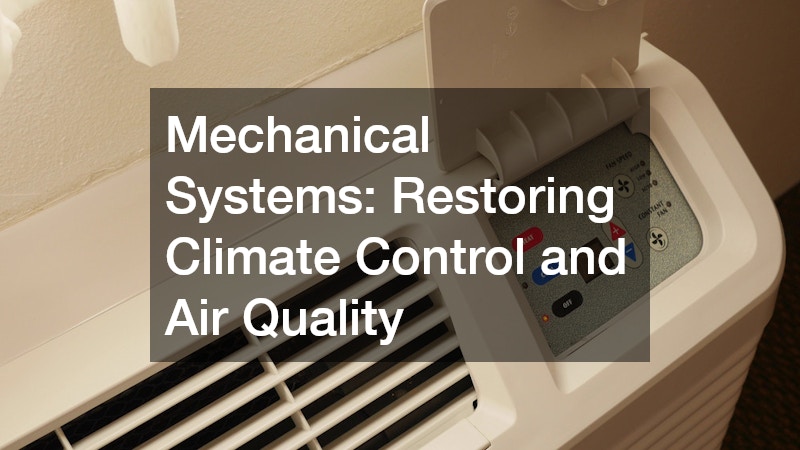
The mechanical infrastructure of a house acts as its respiratory and circulatory systems. When your heating, cooling, or ventilation systems drop in efficiency, your daily comfort plummets and your energy consumption skyrockets. Furthermore, certain mechanical failures can introduce silent, deadly health hazards into the very air you breathe.
Diagnosing uneven temperatures and system short-cycling
An air conditioner or furnace should run smoothly until it reaches your desired thermostat setting, then shut off for a period of time. If your unit turns on and off every few minutes, a phenomenon known as short-cycling, the system is under extreme mechanical duress and is likely overheating or freezing up.
-
Check your airflow paths first. Before assuming your entire climate system is broken, check your return vents and supply registers. If they are blocked by furniture or clogged with thick dust, the lack of airflow will cause the equipment to shut down prematurely as a safety precaution.
-
Inspect the outdoor condenser unit. Your outdoor cooling unit needs clear space to expel heat. If it is choked with overgrown weeds, falling leaves, or wrapped in dirt, the system cannot cool your home efficiently, which rapidly destroys the expensive compressor.
-
Build a relationship with a reliable professional. Mechanical diagnostics require specialized tools and deep technical knowledge. Booking an experienced HVAC contractor for annual cleanings and safety checks ensures minor electrical or refrigerant issues are caught before they cause a complete system breakdown during a heatwave.
-
Handle emergency cooling issues promptly. If your system completely stops blowing cold air during the peak of summer, check your circuit breakers and thermostat batteries. If those are fine, you likely need a professional ac repair to replace a blown capacitor, fix a failed fan motor, or trace a refrigerant leak that is gridlocking your system.
Testing for invisible health hazards in your lowest living areas
When thinking about home damage, we often focus on things we can see, like broken glass or rotten wood. However, some of the most severe threats to a home’s habitability are completely invisible, odorless, and tasteless gases that rise naturally from the earth beneath the foundation.
-
Understand the mechanics of soil gas infiltration. Because your home acts like a vacuum due to rising warm air, it pulls air upward from the soil through porous concrete slabs, sump pump pits, and construction joints. This process can trap dangerous sub-surface gases inside your basement or crawlspace.
-
Implement continuous testing. A one-time, short-term test kit provides a brief snapshot, but gas levels fluctuate wildly based on barometric pressure, rain, and soil temperature. Utilizing a digital, long-term testing device gives you a true reading of your home’s average air safety.
-
Deploy active ventilation systems if levels are elevated. If testing reveals that harmful gas levels exceed safety thresholds, standard DIY ventilation will not protect your family. You must install a dedicated radon mitigation service, which uses a specialized fan and PVC piping to draw gases directly from beneath your concrete slab and vent them safely above your roofline.
Water and Waste Management: Preventing Costly Internal Water Damage

Water is the ultimate enemy of a house. Controlled water brings comfort and cleanliness, but uncontrolled water ruins drywall, rots structural lumber, destroys flooring, and fosters toxic black mold. Managing how water enters your home, flows through your walls, and exits into the public sewer or private waste system is paramount to long-term home preservation.
Remedying slow-draining fixtures and mysterious low water pressure
A sudden drop in water pressure or a sink that takes hours to empty is more than just an inconvenience; it is an early warning sign of a compromised piping network. Ignoring these symptoms can lead to burst pipes inside your walls or raw sewage backing up through your shower drains.
-
Isolate the location of the plumbing problem. If only one sink is draining slowly, the issue is local to that specific fixture’s P-trap. If every drain in the house is sluggish or gurgling when you flush the toilet, the blockage is deep within the main waste line leaving your home.
-
Avoid chemical drain cleaners. Pouring harsh, acidic chemical liquids down your drains is an invitation for future disaster. These chemicals generate intense heat and use corrosive reactions that can warp PVC pipes and eat completely through older cast-iron plumbing systems.
-
Know when to call for comprehensive plumbing care. For persistent issues like hidden pipe leaks, slab leaks, or complex fixture installations, a licensed plumbing company has the diagnostic cameras and pressure-testing equipment required to locate and repair the issue without destroying your walls unnecessarily.
-
Clear major main-line blockages professionally. When tree roots intrude into your underground pipes or decades of grease build-up choke the line, standard snakes will not clear the path. A professional sewer drain cleaning using high-pressure hydro-jetting or heavy-duty mechanical cutters is the only way to fully restore the diameter of your main waste pipe.
Maintaining off-grid waste systems to avoid catastrophic backups
For homes not connected to a municipal sewer network, an underground waste tank and soil absorption field handle all domestic wastewater. These systems are highly effective but require strict adherence to a maintenance schedule. A neglected waste tank will eventually fail, forcing raw sewage back up into the home or flooding your lawn with hazardous wastewater.
-
Practice strict waste disposal discipline. Your underground system relies on natural bacteria to break down solids. Flushing wet wipes, paper towels, feminine products, cigarettes, or harsh chemicals kills these beneficial bacteria and causes rapid, unmanageable blockages.
-
Protect your drainfield from physical weight. The network of perforated pipes buried in your yard relies on loose, porous soil to filter and evaporate wastewater. Never park cars, build sheds, or plant large, deep-rooted trees over your drainfield, as the weight will crush the pipes and block the entire system.
-
Track your system’s sludge levels. Solids accumulate at the bottom of the underground tank over time. If these solids rise too high, they flow out into the drainfield, plugging the soil pores and destroying the entire system, which costs tens of thousands of dollars to replace.
-
Schedule regular professional preventative care. Depending on the size of your household, you should routinely hire septic tank pumping services every three to five years. This regular maintenance removes accumulated solids, inspects the structural baffles of the tank, and ensures your waste system functions perfectly without risk of backflow.
Assessing and repairing home damage does not have to be a source of constant anxiety. By shifting your mindset from reactive panic to proactive evaluation, you transform yourself from a stressed homeowner into an empowered steward of your property. Every home will experience wear, tear, and unexpected failures, but the severity of the ultimate outcome depends entirely on how quickly and logically you respond to the initial warning signs.